
Blog
E2E Deal Insights Blog offers insights into everything related to buying, selling, integrating, and separating a company.
-

The M&A Rearview Mirror: How Look-Back Analysis on Synergy Forecasts Transforms Your Deal Playbook
Most M&A teams meticulously forecast synergies before a deal closes — but how many go back years later to check how those numbers actually played out? A structured look-back analysis on past deals can recalibrate estimation accuracy, strengthen integration execution, and fundamentally upgrade your M&A playbook. When was the last time your team honestly compared…
-

Mitsubishi Heavy Industries: How Japan’s Industrial Titan Quietly Built a Global Empire Through Calculated Acquisitions
Mitsubishi Heavy Industries has spent 140 years building one of the world’s most diversified industrial empires — and its acquisition strategy offers lessons that most serial acquirer analyses overlook. From the $4 billion consolidation of Mitsubishi Hitachi Power Systems to the painful SpaceJet write-off, MHI’s deal-making reveals a masterclass in strategic patience, portfolio discipline, and…
-

Measuring What Matters: A Rigorous Guide to KPIs and Benchmarks for Post-Merger Integration Success
Measuring post-merger integration success requires far more than tracking cost synergies against the deal model—it demands a rigorous framework spanning financial, operational, and cultural KPIs anchored directly to the deal thesis. This article breaks down three core principles with real-world cases from Illinois Tool Works, Pernod Ricard, and Danaher to show what disciplined PMI measurement…
-

Integrating Two Treasury Functions: 8 Best Practices for Consolidating Cash Management and Banking Relationships After a Merger
Merging two companies is hard enough—merging their treasury functions is where deals quietly succeed or silently bleed value. This article lays out 8 battle-tested best practices for consolidating cash management and banking relationships after a merger, from Day 1 readiness to long-term liquidity optimization. What’s the biggest treasury integration lesson you’ve learned the hard way?
-

Cultural Integration in M&A: Frameworks for Assessing Compatibility Before the Ink Dries
Cultural incompatibility is one of the leading destroyers of M&A value, yet it consistently receives a fraction of the diligence attention given to financial and legal risks. This article presents three practical frameworks for assessing cultural compatibility and brings them to life through the Daimler-Chrysler, Disney-Pixar, and Kraft-Cadbury cases. On your last deal, did cultural…
-
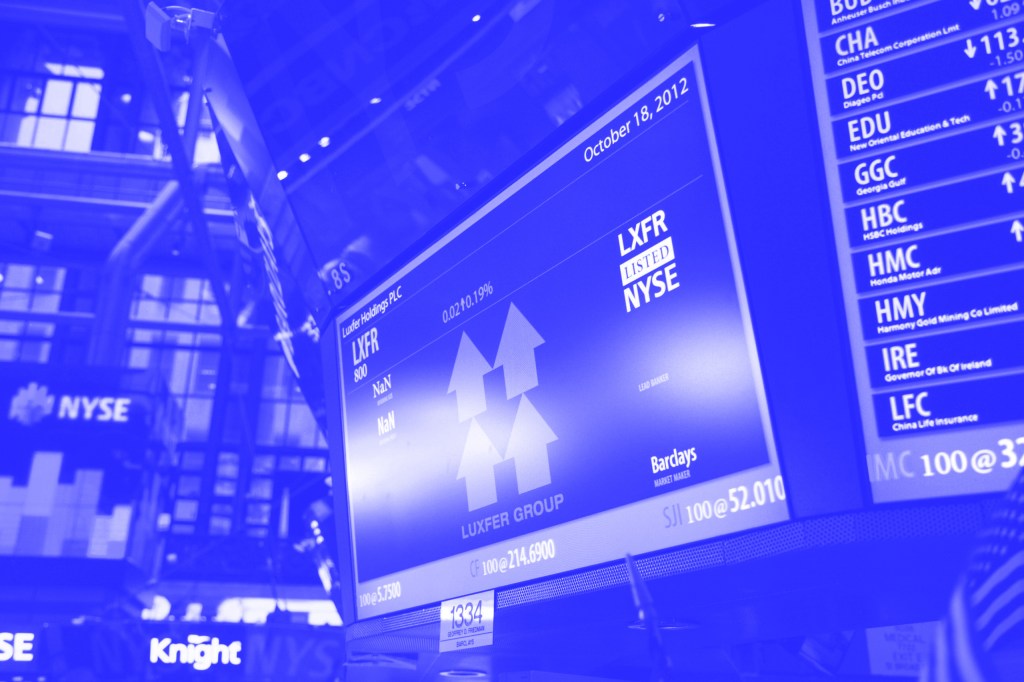
Luxfer Holdings: Inside the Acquisition Playbook of a Quiet Serial Acquirer in Advanced Materials
Luxfer Holdings has spent over a century building a portfolio of advanced materials businesses through selective, disciplined M&A—favoring precision over pace in a market that rewards both. With hydrogen infrastructure, rising defense budgets, and global healthcare expansion creating new opportunities, Luxfer’s next move could be its most revealing yet. Will the company maintain its signature…
-

When Revenue Isn’t What It Seems: 7 Ways ASC 606 and IFRS 15 Can Transform Your M&A Target’s Valuation
Revenue used to be the simplest number on the income statement—until ASC 606 and IFRS 15 rewrote the rules. These standards have transformed M&A due diligence, creating new risks around variable consideration estimates, principal vs. agent determinations, and accounting judgments that can materially shift valuations. Is your deal team equipped to spot where reported revenue…
-

Locking In the Deal: Why Proactive FX Hedging Is a Non-Negotiable for Cross-Border M&A With Extended Closing Periods
Cross-border M&A deals with extended closing periods expose acquirers to currency swings that can erode hundreds of millions in deal value — yet many dealmakers still treat FX hedging as an afterthought. This article breaks down three pillars of value that proactive hedging delivers, illustrated through real mega-deals like Bayer-Monsanto, SoftBank-ARM, and Linde-Praxair. If your…
-

The Integration Trust Deficit: Communication Strategies That Determine Whether Your M&A Deal Delivers or Derails
Most M&A value destruction doesn’t start in the spreadsheet — it starts in the silence between announcement and integration. This article breaks down three communication strategies that protect trust across every stakeholder group, backed by real cases from Microsoft, Danaher, and Unilever. How much rigor does your integration communication plan actually receive compared to your…
-

Assa Abloy: How the World’s Largest Lock Company Built an Empire One Acquisition at a Time
Assa Abloy has completed over 300 acquisitions since 1994, transforming a fragmented lock industry into a global, technology-driven access solutions platform worth over USD 12 billion in annual revenue. This deep dive examines the Swedish giant’s deal-making methods, integration playbook, divestiture discipline, and the strategic challenges it faces as antitrust enforcement intensifies worldwide. Can dominant…
-

Beyond the Handshake: 5 Advanced Modeling Techniques for Valuing Cross-Sell and Up-Sell Revenue Synergies in M&A
Most M&A revenue synergy models rely on a single attachment rate applied to the entire customer base—but seasoned acquirers know that approach leaves value and credibility on the table. This article breaks down five advanced modeling techniques for projecting cross-sell and up-sell synergies, from customer-cohort migration modeling to Monte Carlo simulation, with concrete inputs and…
-

Stress-Testing the Links: Why a Supply Chain Resiliency Test Belongs in Every M&A Due Diligence Playbook
A flawless income statement means little if the target’s supply chain depends on a single supplier in a geopolitically volatile region—and you discover that after closing. This article breaks down how a structured supply chain resiliency test during M&A due diligence reveals hidden valuation risk, unlocks post-close value creation, and sharpens negotiation leverage, with real-world…
 E2E Deal Insights