
Luxfer Holdings: Inside the Acquisition Playbook of a Quiet Serial Acquirer in Advanced Materials
The Company Behind the Cylinders
Luxfer Holdings PLC is not a household name, and that is somewhat by design. Founded in 1898 in the United Kingdom, the company has spent more than a century refining its expertise in advanced materials engineering—a niche that rarely makes headlines but underpins critical industries from healthcare to defense. Headquartered in Manchester, England, Luxfer designs and manufactures highly engineered industrial products using specialty materials such as magnesium alloys, zirconium chemicals, carbon composites, and high-pressure gas cylinders made from aluminum and carbon fiber.
Luxfer operates across two primary reporting segments: Gas Cylinders and Elektron. The Gas Cylinders segment produces high-pressure aluminum and composite cylinders used in medical oxygen delivery, self-contained breathing apparatus (SCBA) systems for first responders, alternative fuel storage for natural gas vehicles, and various industrial gas applications. The Elektron segment focuses on specialty chemicals and advanced materials, including magnesium powders and alloys for aerospace and defense, zirconium-based catalysts for emission control, and proprietary rare earth-based products. Together, these two segments position Luxfer at the intersection of safety-critical and performance-critical applications.
The company’s operational footprint spans several continents. Luxfer maintains manufacturing facilities in the United Kingdom, the United States, France, Canada, and China, with additional sales offices and distribution capabilities extending its reach into global markets across Europe, Asia-Pacific, the Middle East, and the Americas. The company is listed on the New York Stock Exchange under the ticker LXFR, which reflects its significant revenue exposure to North American markets despite its British heritage.
Luxfer’s end markets include healthcare, defense, transportation, environmental and sustainability applications, and general industrial uses. This diversification across both geographies and end markets provides the company with a degree of resilience, though it also means that M&A activity must be carefully calibrated to fit within a portfolio that, while varied, is bound together by a common thread of advanced materials expertise and engineered-to-spec manufacturing.
For M&A professionals, Luxfer presents an interesting case study. The company is not a platform acquirer assembling a conglomerate through financial engineering. It is, instead, an industrial acquirer that uses M&A selectively to deepen capability, expand geographic access, and reinforce competitive moats in specialty niches where materials science and process know-how serve as genuine barriers to entry.
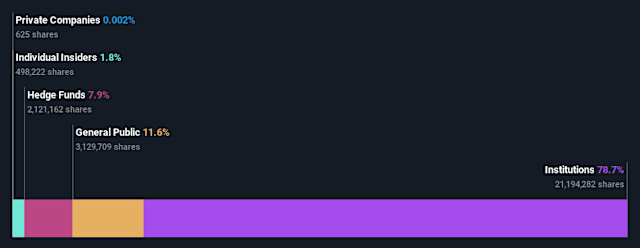
Luxfer Holdings’ ownership structure is dominated by institutional investors at 78.7%, reflecting the stable, long-term shareholder base typical of disciplined mid-cap industrial acquirers—a profile that supports management’s conservative, bolt-on approach to M&A over pressure-driven deal-making.
Acquisition History: Purposeful, Periodic, and Pattern-Driven
Luxfer’s acquisition history stretches back decades, and the company’s approach to M&A has consistently reflected its strategic identity as a specialty materials manufacturer. Rather than pursuing high-frequency deal-making, Luxfer has tended to acquire selectively, targeting businesses that fill specific gaps in its product portfolio, geographic coverage, or technical capabilities.
Over the past two decades, Luxfer has completed a series of acquisitions that have shaped its current portfolio. Among the most significant was the acquisition of Magnesium Elektron, which gave Luxfer its proprietary position in magnesium alloys and rare earth materials. This deal fundamentally expanded the company’s addressable markets and became the foundation of the Elektron segment that now accounts for a meaningful share of total revenue. In terms of scale relative to Luxfer’s enterprise value at the time, the Magnesium Elektron integration was arguably the most transformative single transaction in the company’s modern history.
More recently, Luxfer acquired Applied Magnesium International (AMI) in the mid-2010s, strengthening its magnesium recycling and alloy production capabilities. The company also completed the acquisition of Structural Composites Industries (SCI), a California-based manufacturer of composite pressure vessels, which bolstered Luxfer’s position in lightweight high-pressure containment solutions for alternative fuel and aerospace applications.
In the most recent five-year window, Luxfer’s acquisition pace has been measured rather than aggressive. The company has completed a small number of targeted deals, generally one or two transactions during active periods, interspersed with years focused on organic growth and portfolio optimization. In some recent fiscal years, Luxfer completed no acquisitions at all, opting instead to focus capital allocation on operational improvements, debt reduction, and returning cash to shareholders through dividends and share repurchases.
This pattern reveals a disciplined approach. Luxfer does not acquire for the sake of revenue growth alone. The types of companies it targets share several consistent characteristics: they operate in specialty or niche segments, they possess proprietary manufacturing processes or materials know-how, they serve regulated or safety-critical end markets, and they offer either geographic or product adjacency to Luxfer’s existing operations. The company has shown a clear preference for acquisitions that bring technical differentiation rather than mere volume.
Strategically, this aligns with Luxfer’s stated goal of being a leader in advanced materials for critical applications. Each acquisition has reinforced one or more pillars of this strategy, whether by adding a new substrate (such as composites alongside aluminum), expanding downstream capability (such as moving from raw material production into engineered components), or securing supply chain advantages (such as magnesium recycling capacity).
For those tracking trends, one pattern stands out: Luxfer has increasingly oriented its acquisition interest toward businesses with sustainability or environmental relevance. Lightweight composite cylinders for alternative fuel vehicles, magnesium alloys that reduce weight in transportation applications, and zirconium catalysts for emission reduction all sit at the intersection of industrial performance and environmental benefit. This thematic thread suggests that future acquisitions will likely continue to emphasize materials and products that enable decarbonization, lightweighting, and clean energy storage.
Acquisition Methods: Conservative Capital, Strategic Control
Luxfer’s approach to deal execution reflects the financial conservatism typical of mid-cap industrial acquirers operating in specialty markets. The company has historically financed acquisitions through a combination of cash on hand, operating cash flow, and draws on its revolving credit facility. Luxfer has not relied on large equity issuances to fund deals, which is consistent with its relatively modest deal sizes and its board’s apparent emphasis on protecting earnings per share dilution.
The company maintains a revolving credit facility that provides liquidity for both working capital and bolt-on acquisitions. This facility has typically been structured with a syndicate of banks, giving Luxfer the flexibility to act relatively quickly when acquisition opportunities arise without the need for lengthy capital-raising processes. For a company of Luxfer’s size—with annual revenues generally in the range of $350 million to $450 million—the revolving credit facility serves as an efficient and flexible tool for funding tuck-in acquisitions valued in the tens of millions rather than the hundreds of millions.
Luxfer has not publicly disclosed a singular, long-standing preferred financial advisor for M&A transactions. Mid-cap industrial companies of Luxfer’s profile often work with a rotating set of advisory firms depending on the specific deal, geography, and sector involved. Investment banks with strong industrials practices in the UK and US mid-market, such as Rothschild, Houlihan Lokey, Jefferies, and similar firms, are typical advisors for companies in this segment, though specific mandates for Luxfer deals are not consistently disclosed in public filings.
Deal structuring at Luxfer tends to be straightforward. The company has generally pursued outright acquisitions rather than minority stakes, joint ventures, or earnout-heavy structures. This preference for full ownership aligns with a post-merger integration philosophy that values operational control and the ability to fully embed acquired capabilities into existing business segments. When Luxfer acquires a company, it typically intends to integrate the target’s operations, technology, and personnel into one of its two reporting segments within a defined period.
One notable aspect of Luxfer’s acquisition method is its patience. The company has demonstrated a willingness to wait for the right deal rather than pursue acquisitions to meet an arbitrary cadence or market expectation. This patience has occasionally frustrated investors looking for faster top-line growth, but it has also helped Luxfer avoid the overpayment traps and integration migraines that plague more aggressive serial acquirers. In M&A, the deals you decline often matter as much as the deals you close.
Post-Merger Integration: Lean, Internal, and Operationally Focused
Post-merger integration at Luxfer appears to follow a lean, internally managed model. The company has not publicly disclosed the existence of a dedicated, permanent integration management office (IMO) of the kind maintained by high-frequency acquirers such as Danaher or Roper Technologies. This is consistent with Luxfer’s acquisition frequency; when a company completes one or two deals over a multi-year period, a standing IMO would represent an overhead cost disproportionate to its utilization.
Instead, Luxfer relies on cross-functional integration teams assembled from its existing operational and functional leadership. The company’s relatively flat organizational structure and its division into two clear business segments (Gas Cylinders and Elektron) provide natural integration pathways for acquired businesses. A target that manufactures composite pressure vessels, for example, slides logically into the Gas Cylinders segment, where existing leadership manages the operational, commercial, and supply chain integration.
Luxfer has not prominently named external integration advisors in its public disclosures or press releases. This does not necessarily mean the company has never engaged third-party consultants for integration support, but it does suggest that Luxfer handles the bulk of integration planning and execution internally. For a company with deep operational expertise in its own manufacturing processes, this approach makes sense. The critical integration challenges for Luxfer’s deals tend to be technical and operational—aligning manufacturing processes, integrating quality management systems, rationalizing supply chains—rather than the cultural or IT-systems integration challenges that often drive demand for external advisors in larger, more complex transactions.
The company’s integration philosophy appears pragmatic. Luxfer typically preserves the core manufacturing capabilities and technical talent of acquired businesses while consolidating back-office functions and aligning commercial operations with existing distribution channels. This approach minimizes disruption to production—a critical consideration when your products are used in breathing apparatus for firefighters or medical oxygen delivery systems where supply continuity is literally a life-and-death matter.
For M&A professionals evaluating Luxfer’s integration capability, the key takeaway is that the company’s integration model is fit for purpose. It matches the size, complexity, and frequency of its deals. This is not a company that needs the sophisticated, repeatable integration playbook of a high-velocity acquirer. It needs, and appears to have, the operational discipline to absorb a small number of targeted acquisitions efficiently, extract the intended synergies, and move on.
Divestitures: Pruning the Portfolio When the Fit Fades
Not every acquisition delivers the value originally envisioned, and Luxfer has demonstrated the willingness to divest when strategic alignment erodes or when a business unit no longer fits the portfolio thesis. This is a mark of capital allocation discipline that M&A professionals should note, because the ability to sell is every bit as important as the ability to buy—and considerably rarer among management teams emotionally attached to past decisions.
Luxfer’s most notable recent divestiture involved the sale of its Superform business, which specialized in superplastic forming of aluminum and titanium components, primarily for the aerospace and automotive industries. While Superform represented genuine technical capability, the business occupied an increasingly peripheral position within Luxfer’s portfolio. The superplastic forming process, though sophisticated, served a different customer base and required a different go-to-market approach than Luxfer’s core gas cylinder and specialty chemicals operations. The strategic reasoning behind the divestiture centered on portfolio focus: by exiting Superform, Luxfer could concentrate management attention and capital on higher-growth, higher-margin segments with stronger alignment to its advanced materials identity.
Luxfer also divested certain product lines within its Gas Cylinders segment over the years, including businesses related to lower-margin, commodity-oriented cylinder products. These divestitures reflected a broader strategic shift toward higher-value, higher-specification products where Luxfer’s engineering capabilities and regulatory certifications create meaningful competitive advantages.
The company has not publicly identified a preferred divestiture or carve-out advisor. As with its acquisition advisory relationships, Luxfer likely engages advisors on a deal-by-deal basis depending on the asset, the buyer universe, and the geographic context. For divestitures of the size and complexity typical for Luxfer—generally involving discrete business units or product lines rather than multi-billion-dollar corporate separations—mid-market investment banks with strong industrial sector coverage are the natural advisory partners.
Strategically, Luxfer’s divestitures reveal a portfolio management philosophy that distinguishes between assets that contribute to the core thesis and assets that merely generate revenue. The company has shown a consistent willingness to trade top-line scale for portfolio coherence, which over time tends to improve return on invested capital and simplify the equity story for investors. For M&A practitioners advising mid-cap industrials, Luxfer’s approach to divestitures offers a useful template: divest when the strategic rationale has expired, not merely when the financial performance deteriorates.
Looking Ahead: Where Luxfer’s Deal Compass Points Next
Projecting Luxfer’s future acquisition activity requires examining the intersection of its stated strategy, its end-market dynamics, and the broader trends shaping advanced materials and industrial manufacturing.
Luxfer’s management has consistently signaled interest in acquisitions that strengthen its position in specialty materials for critical applications. The company’s recent strategic plans have emphasized growth in clean energy, healthcare, and defense—three end markets with secular tailwinds that are unlikely to reverse in the medium term. Clean energy, in particular, represents a compelling growth vector for Luxfer, given its existing capabilities in high-pressure gas containment (relevant to hydrogen storage), lightweight composite materials, and emission-reduction catalysts.
Hydrogen economy infrastructure is perhaps the most visible opportunity. As governments worldwide invest in hydrogen production, distribution, and storage, demand for high-pressure composite cylinders and related containment solutions is expected to grow significantly. Luxfer already manufactures hydrogen storage cylinders, but the company could pursue acquisitions to expand its capacity, extend into adjacent components such as valves and regulators, or acquire capabilities in emerging hydrogen storage technologies such as solid-state or metal hydride systems. Any target in this space would need to meet Luxfer’s established criteria: proprietary technology, defensible market position, and clear operational integration pathways.
In defense, Luxfer’s magnesium alloys, lightweight armor solutions, and specialty chemicals serve applications ranging from military countermeasures (infrared flares) to advanced structural components. Rising defense budgets across NATO and allied nations create demand tailwinds, and Luxfer could pursue acquisitions that deepen its defense portfolio or extend into adjacent defense materials applications such as energetics or advanced ceramics.
Healthcare represents another logical acquisition avenue. The global need for medical oxygen delivery systems, particularly in emerging markets where healthcare infrastructure continues to develop, provides a steady demand baseline. Acquisitions that expand Luxfer’s geographic reach in medical gas equipment or add adjacent product categories such as portable oxygen concentrator components could complement organic growth in this segment.
The most likely acquisition profile for Luxfer’s next deal involves a privately held, specialty manufacturer with revenues in the range of $20 million to $100 million, operating in a niche that either directly overlaps with or is immediately adjacent to Luxfer’s existing product portfolio. The target would likely possess proprietary manufacturing processes, relevant regulatory certifications, and an established customer base in one of Luxfer’s priority end markets. Geography could vary, but targets in North America and Europe remain the most probable given Luxfer’s existing operational footprint and the transaction costs associated with integrating businesses in less familiar jurisdictions.
Luxfer’s balance sheet currently supports modest acquisition activity. The company maintains manageable leverage and consistent free cash flow generation, which provides the financial capacity for bolt-on deals without requiring transformative capital structure changes. However, a larger acquisition—one that would meaningfully alter Luxfer’s scale or market position—would likely require additional financing, whether through an expanded credit facility, a term loan, or potentially a modest equity raise.
Management succession and strategic continuity also bear watching. Luxfer has undergone leadership transitions in recent years, and the appetite for M&A activity often shifts with new executive leadership. The current management team has articulated a strategy centered on operational excellence and targeted growth, which suggests acquisition activity will remain selective but purposeful.
For M&A professionals advising potential targets in specialty materials, gas containment, or adjacent clean energy technologies, Luxfer warrants close attention as a potential acquirer. The company’s track record suggests a disciplined buyer that moves deliberately, pays reasonable multiples, and integrates with operational rigor. Sellers should expect thorough due diligence, a preference for clean deal structures, and an acquirer that values technical capability over top-line growth for its own sake.
Conclusion: The Discipline of Doing Less
Luxfer Holdings represents a particular species of serial acquirer—one that prioritizes strategic fit, operational integration, and capital discipline over deal volume. In a landscape where many serial acquirers measure success by the number of transactions closed per year, Luxfer measures success by whether each acquisition strengthens its position as a leader in advanced materials for critical applications.
The company’s acquisition history reveals a consistent pattern: targeted, niche-focused deals that add technical capability or geographic reach, financed conservatively, integrated internally, and periodically pruned through divestitures when strategic alignment fades. This approach has allowed Luxfer to build a defensible portfolio of specialty businesses without the leverage burden or integration complexity that often accompanies more aggressive acquisition strategies.
For M&A practitioners, Luxfer’s model offers a useful counterpoint to the high-velocity playbooks of larger platform acquirers. There is a version of serial acquisition that values precision over pace, and Luxfer’s sustained position in demanding, safety-critical markets suggests that this approach can deliver durable competitive advantage.
As the hydrogen economy accelerates, defense spending rises, and healthcare infrastructure expands globally, Luxfer sits at a strategic crossroads with multiple attractive paths forward. The company’s next acquisition will reveal much about how management prioritizes among these opportunities—and whether Luxfer is prepared to step up in deal size to match the scale of the market opportunity ahead.
Given Luxfer’s deliberate pace and its growing exposure to hydrogen and clean energy markets, should M&A practitioners expect the company to shift toward larger, more transformative deals—or will the quiet, bolt-on approach that has defined Luxfer for decades remain the prevailing strategy?
 E2E Deal Insights
Leave a comment