
Foundations of Capital Compounding: A Rigorous Analysis of CRH plc as a Global Serial Acquirer
The global corporate landscape features many conglomerates that destroy shareholder value through undisciplined diversification. However, a select group of programmatic acquirers uses consistent, structured mergers and acquisitions to compound capital steadily over decades. This specific model avoids the high-stakes risks of transformational megadeals, relying instead on a continuous series of smaller, low-risk bolt-on acquisitions. Corporate finance practitioners know this model through notable technology and industrial examples like Constellation Software or Halma plc.
Yet, the model takes a different form when applied to heavy, asset-intensive industries. Achieving operational efficiency in these sectors requires deep regional scale, optimized logistics, and strict capital allocation. CRH public limited company stands out as a clear example of this approach. This article examines the strategic playbook of CRH plc, analyzing its history, deal structuring, integration methods, and approach to divestitures.
The Architectural Blueprint: Who is CRH plc?
CRH plc operates as a global leader in building materials and integrated construction solutions. The company began in 1970 through the merger of two Irish entities: Cement Limited, established in 1936, and Roadstone Limited, founded in 1949. This combination united a major cement producer with a leading aggregate and asphalt specialist. The corporate headquarters remains in Dublin, Ireland, reflecting its European heritage. However, the operational footprint shifted significantly over time, with North America now serving as the main source of earnings.
The business model relies on asset density, localized supply chains, and vertical integration. CRH plc operates 3,961 locations across 28 countries, maintaining a diverse global infrastructure footprint. The operational network includes:
- Americas Materials Solutions: An extensive network of quarries, asphalt plants, and ready-mixed concrete facilities across the United States and Canada.
- Americas Building Solutions: Specialized production facilities generating architectural products, utility enclosures, and stormwater management systems.
- International Solutions: Aggregates, cement operations, and civil infrastructure production sites spanning Europe and Australia.
Scaling Through Segments: The Acquisition History
The expansion of CRH plc follows a clear pattern of programmatic deal-making. The company focuses on building dense regional networks where local market share leads to pricing power and logistics efficiency. Its transaction history balances selective, large-scale acquisitions with a steady flow of smaller, value-adding bolt-on deals.
| Year | Milestone Transaction | Strategic Significance |
| 1978 | Entry into the United States via Amcor | Formed Oldcastle Inc., establishing the foundation for North American growth. |
| 2006 | Acquisition of Ashland Paving and Construction ($1.3B) | Significantly expanded aggregate and highway construction footprints in the US. |
| 2015 | Carve-out of LafargeHolcim Assets (€6.5B) | The largest deal in company history, adding 24 cement plants and 10 grinding stations. |
| 2018 | Acquisition of Ash Grove Cement Company ($3.5B) | Secured a leading position in the US midwest and western cement markets. |
| 2024 | Purchase of Martin Marietta Materials Assets ($2.1B) | Added vital cement and ready-mixed concrete assets in the high-growth Texas market. |
| 2025 | Acquisition of Eco Material Technologies ($2.1B) | Positioned the firm at the forefront of low-carbon cement and fly ash distribution. |
The largest single transaction occurred in 2015 when CRH plc acquired a global portfolio of assets from the merging Lafarge and Holcim for an enterprise value of €6.5 billion. This carve-out instantly positioned CRH plc as a major global player in aggregates and cement.
Deal volume remains high, with CRH plc acquiring over 60 companies in the last five years. In 2024 and 2025, the company executed several large acquisitions, including the Adbri and Civilmart transactions. These strategic acquisitions expanded the company’s presence in the Australian concrete and infrastructure markets.
The company focuses its acquisition strategy on targets with strong positions in heavy materials or specialized downstream solutions. This approach matches its broader goal to move from standard material supply to full-scale infrastructure solutions. The strategy favors companies operating in high-growth regions like the U.S. Sun Belt, where rising infrastructure spending drives long-term demand.
Capital Allocation and Structuring: Acquisition Methods
A successful serial acquirer requires a highly disciplined funding model to maintain a strong balance sheet. CRH plc funds its programmatic transactions through a combination of consistent free cash flow generation, corporate debt issuance, and strategic divestitures. The company limits the use of equity issuance for standard acquisitions, preventing share dilution and focusing on return on capital employed.
The corporate treasury coordinates capital allocation to ensure individual acquisitions do not jeopardize the investment-grade credit rating. The financial framework uses a centralized liquidity pool alongside flexible local operating lines. This structure allows regional management teams to pursue smaller bolt-on deals quickly while leaving large transactions under central oversight.
For major transactions, CRH plc relies on a trusted group of global investment banks. BofA Securities and Morgan Stanley regularly provide financial advice, valuation analysis, and debt underwriting. For smaller, regional acquisitions, the company utilizes boutique advisory firms or handles the process internally via its corporate development team.
Operational Continuity: Post-Merger Integration Approach
Experienced corporate development professionals know that transaction announcements represent only the first step in value creation. The true test of an acquisition lies in the post-merger integration phase. CRH plc addresses this challenge through a hybrid integration framework that balances centralized financial oversight with decentralized operational control.
The company manages transactions via its internal corporate development and strategy offices, led by the Chief Development Officer. This internal team sets the integration timeline, coordinates legal compliance, and establishes financial reporting standards. For complex cross-border deals or large carved-out assets, CRH plc uses specialized global consulting firms like McKinsey & Company or Deloitte to manage IT system migrations and operational alignment.
The integration strategy follows a distinct operational philosophy:
- Preservation of Local Autonomy: The company avoids dismantling the operational management of well-run local businesses, recognizing that aggregate and concrete markets depend on regional relationships.
- Integration of Back-Office Functions: Financial reporting, tax optimization, health and safety protocols, and procurement are quickly moved to global corporate standards.
- Commercial Strategy Alignment: Acquired units gain access to the broader product network, allowing them to shift from raw material suppliers to comprehensive construction solutions providers.
Portfolio Pruning: The Strategy Behind Divestitures
Continuous capital compounding requires an ongoing review of existing assets. CRH plc actively divests underperforming or non-core businesses to free up capital for higher-margin opportunities. This disciplined approach means the company steps away from assets when their strategic fit or financial return drops below internal targets.
The largest divestiture occurred in 2019 when CRH plc sold its European Distribution division to Blackstone for an enterprise value of €1.64 billion. This business focused on direct-to-consumer and contractor building merchants. While profitable, it operated with lower margins and required different logistics than the core heavy materials division.
Portfolio optimization has continued into recent quarters. In early 2026, the company agreed to sell its Oldcastle Lawn & Garden business to Pacific Avenue Capital Partners for $1.1 billion. This divestiture helped fund the $700 million acquisition of Axius Water, highlighting a clear shift toward water infrastructure and specialized environmental solutions.
When executing large divestitures, CRH plc typically hires major financial advisors like BofA Securities or J.P. Morgan to manage the carve-out and marketing processes. This targeted approach ensures complex carve-outs do not disrupt ongoing operations.
Future Horizons: Emerging Themes in the Deal Pipeline
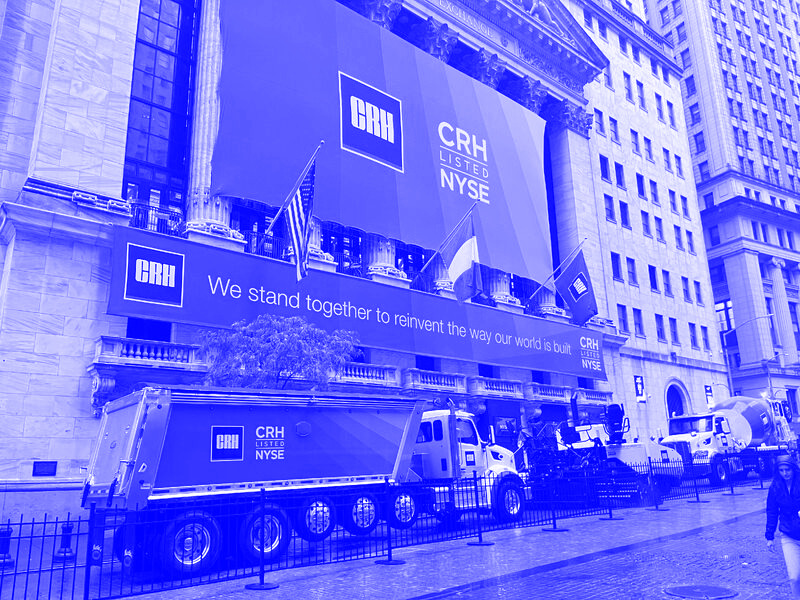
The evolution of CRH plc points toward several key trends for its future acquisition pipeline. Investors can expect a continued focus on expanding its North American footprint, driven by public funding from the Infrastructure Investment and Jobs Act and ongoing industrial construction trends. The company’s recent listing move to the New York Stock Exchange underscores this strategic focus.
Future acquisitions will likely prioritize two main areas:
- Sustainable and Low-Carbon Materials: Building on its $2.1 billion purchase of Eco Material Technologies, CRH plc will target suppliers of alternative cements, fly ash distributors, and recycled concrete operators to meet growing decarbonization targets.
- Advanced Downstream Water Infrastructure: Following the Axius Water and Hydro International transactions, the company is positioning itself to acquire businesses specializing in stormwater control, wastewater management, and engineered utility enclosures.
This targeted approach allows CRH plc to avoid overvalued megadeals. Instead, the company expands its integrated solutions model by purchasing specialized businesses that fit cleanly into its existing regional networks.
Conclusion
The growth of CRH plc shows that serial acquisition strategies can work effectively in capital-intensive industries. By combining local operational management with central financial discipline, the company avoids the common pitfalls of large-scale diversification. As global markets place greater emphasis on sustainable infrastructure and localized supply chains, the programmatic M&A playbook will face new challenges. How should corporate development teams adapt their integration strategies when buying specialized technology businesses compared to traditional, asset-heavy materials companies?
 E2E Deal Insights
Leave a comment