
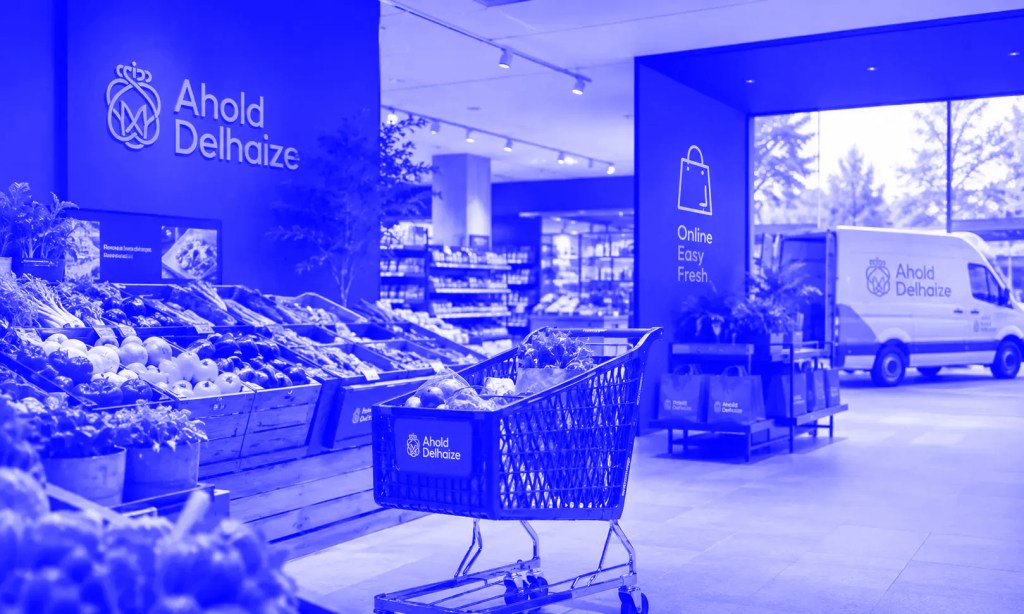
The Serial Acquirer Blueprint: Strategic Roll-Ups, Post-Merger Synergies, and Capital Allocation at Ahold Delhaize
Mergers and acquisitions in the global food retail sector demand an extraordinary balance between local market intimacy and massive back-end scale. Grocery retail operates on razor-thin operating margins, where minor supply chain inefficiencies quickly destroy equity value. Serial acquirers in this space cannot rely on financial engineering alone to generate sustainable shareholder returns. Successful acquirers build repeatable acquisition playbooks that combine disciplined target selection, rigorous integration governance, and continuous portfolio optimization.
Koninklijke Ahold Delhaize N.V. represents one of the most instructive case studies of serial acquisition success in multinational retail. The corporate entity emerged on July 25, 2016, through a €26 billion cross-border merger of equals between Dutch retailer Royal Ahold and Belgian retailer Delhaize Group. Both legacy organizations possessed deep historic roots extending back to the nineteenth century, with Delhaize founding its business in 1867 and Ahold opening its first store in 1887.
Ahold Delhaize operates as a public holding company listed on Euronext Amsterdam and Euronext Brussels. The group maintains its global corporate headquarters in Zaandam, Netherlands. The organization manages a geographic footprint that spans nine countries across North America, Western Europe, and Central and Southeastern Europe. The United States serves as the company’s primary earnings generator, contributing approximately two-thirds of total group revenue through regional powerhouses like Food Lion, Stop & Shop, The GIANT Company, Giant Food, and Hannaford. The European operational platform includes Albert Heijn and Etos in the Netherlands, Delhaize in Belgium and Luxembourg, Albert in the Czech Republic, Alfa Beta in Greece, Mega Image and Profi in Romania, and Delhaize Serbia. The business also maintains strategic joint ventures in Portugal through Pingo Doce and in Indonesia through Super Indo.
The company manages a physical footprint of over 7,900 stores supported by more than 400,000 employees globally. Massive distribution hubs, highly automated fulfillment centers, and localized corporate offices support these retail operations across each key operating region. Ahold Delhaize generates over €89 billion in annual net revenue by operating a diversified portfolio of physical supermarkets, convenience stores, online grocery services, and specialty retail formats.
Deconstructing the Acquisition History and Deal Strategy
Ahold Delhaize built its global footprint through decades of systematic roll-up acquisitions and strategic combinations. Long before the 2016 landmark merger, both predecessor companies executed aggressive international expansion programs. Legacy Ahold established its American footprint by acquiring Stop & Shop in 1995 and Giant Food in 1998. Delhaize simultaneously built a dominant East Coast presence by expanding Food Lion and acquiring Hannaford Brothers in 2000.
The €26 billion merger between Royal Ahold and Delhaize Group in 2016 remains the largest transaction in the group’s history. That transaction combined two complementary store networks to build the fourth-largest grocery retailer in the United States and a dominant market leader across the Benelux region. The deal generated structural cost synergies in procurement, distribution, and corporate overhead.
Ahold Delhaize has maintained a highly selective deal tempo over the last five years. The corporate development team targeted four major strategic acquisitions during this period:
- Ahold Delhaize acquired pure-play online grocery pioneer FreshDirect in January 2021 to accelerate digital capabilities in the New York tri-state region.
- Stop & Shop agreed to acquire King Kullen Grocery Company to consolidate store density on Long Island.
- Mega Image reached a definitive agreement in late 2023 to acquire Romanian grocery retailer Profi Rom Food S.R.L. from private equity firm MidEuropa for an enterprise value of €1.3 billion.
- European brand operational teams executed multiple single-store and small regional independent supermarket acquisitions to strengthen local route density.
The €1.3 billion purchase of Profi stands out as the company’s largest single acquisition during the past operating year. That transaction added over 1,600 stores to the Romanian operational unit. The deal effectively doubled Ahold Delhaize’s market footprint in Romania and created a formidable leader in Central and Southeastern Europe.
A clear pattern emerges when analyzing the company’s corporate development trajectory. Ahold Delhaize consistently targets two distinct profiles of retail companies:
- The company buys strong local market leaders that provide immediate geographic density and high brand equity in core regions.
- The company targets technology-enabled platforms and digital assets that enhance omnichannel capabilities and customer analytics.
This acquisition strategy directly aligns with the corporate “Growing Together” growth initiative. The company avoids speculative international expansion into unfamiliar geographies where it lacks existing supply chain scale. The corporate development team focuses exclusively on fill-in acquisitions that directly yield cost synergies through unified distribution channels and shared private-label sourcing.
Acquisition Methods, Financing Structures, and Advisory Partners
Ahold Delhaize executes acquisitions through structured corporate buyouts, public tender offers, and direct asset purchases. The corporate development committee evaluates targets based on strict return on invested capital metrics. The board enforces clear financial hurdles to ensure every transaction creates long-term economic value for shareholders.
The company funds its deal activity through a balanced combination of internal cash generation, corporate debt instruments, and equity structures. Robust operational cash flows provide the primary funding source for smaller bolt-on store acquisitions. The treasury team taps the European debt capital markets to issue multi-tranche benchmark corporate bonds for mid-sized and large acquisitions. The company regularly maintains a €2.0 billion Euro Medium Term Note program alongside sustainability-linked bond frameworks to finance strategic growth. Ahold Delhaize utilizes equity swaps primarily for transformative mega-mergers that require shared ownership structures.
Ahold Delhaize engages global investment banks and specialized financial advisors to execute capital market operations and strategic M&A:
- Goldman Sachs and J.P. Morgan frequently provide lead financial advisory services and fairness opinions on major strategic combinations.
- Lazard and Bank of America offer valuation expertise and cross-border structural advice for North American transactions.
- ABN AMRO, ING Bank, and Rabobank provide localized transaction execution, debt underwriting, and Dutch legal compliance support.
These financial advisors assist the corporate development team in structuring complex valuation bridges and contingent consideration arrangements. The investment banks also underwrite liquidity facilities that secure transaction completion during turbulent market conditions.
Business Integrations and Post-Merger Integration Governance
Post-merger integration determines whether a serial acquirer captures projected deal synergies or destroys operating value. Ahold Delhaize manages integration risks through a dedicated internal Synergy Management Office. Executive leadership creates deal-specific integration steering committees that oversee transition workstreams across finance, supply chain, human resources, IT, and commercial operations. During the transformative 2016 merger, the board appointed former Delhaize CEO Frans Muller as Chief Integration Officer to guarantee seamless operational convergence.
The company complements its internal integration capability by hiring specialized external integration advisors for major transactions. Ahold Delhaize regularly engages tier-one management consultancies and global accounting firms during complex integrations:
- McKinsey & Company and Bain & Company assist leadership in designing target operating models and mapping commercial procurement synergies.
- PricewaterhouseCoopers and Deloitte manage financial due diligence, tax structuring, and IT systems integration workstreams.
- CMS and Allen & Overy deliver specialized cross-border legal execution and labor union negotiation frameworks.
The company enforces a federated integration architecture across its brand portfolio. The central integration team standardizes back-end enterprise resource planning systems, global supplier negotiations, logistics software, and data infrastructure. Conversely, the local operating units retain total autonomy over customer-facing brand identity, localized store layouts, community marketing, and fresh food sourcing. This balanced integration model preserves local customer loyalty while capturing the cost benefits of international scale.
Portfolio Optimization, Asset Pruning, and Divestitures
Disciplined serial acquirers recognize that selling underperforming assets is just as critical as buying accretive targets. Ahold Delhaize actively reviews its portfolio to identify businesses that no longer align with its core density strategy. The corporate development team divests assets that generate structural margin drag or fail to deliver long-term return targets.
The sale of FreshDirect to ultrafast delivery provider Getir in late 2023 represents the company’s most notable recent divestiture. Ahold Delhaize originally acquired FreshDirect in 2021 to capture pure-play online grocery demand in New York City. Subsequent operational reviews revealed that standalone micro-fulfillment delivery models generated high capital expenditure requirements without delivering sufficient operating margins. Leadership executed a strategic exit from FreshDirect to reallocate capital into store-fulfilled omnichannel delivery channels across its existing retail footprint.
Antitrust regulatory compliance also drives strategic divestitures during large consolidation deals. Ahold and Delhaize Group negotiated a major divestiture package with the United States Federal Trade Commission to secure regulatory approval for their 2016 merger. The companies divested 81 supermarket locations across seven East Coast states to well-capitalized buyers like Weis Markets, Publix, and Big Y. This regulatory remedy eliminated localized market overlap while preserving the core strategic value of the primary transaction.
Ahold Delhaize collaborates with specialized financial and transaction advisors to execute divestitures and corporate carve-outs. Rothschild & Co and Lazard frequently assist the board in evaluating strategic exit options and identifying financial sponsors. Financial advisory teams from Ernst & Young and KPMG prepare sell-side quality of earnings reports and assist management in structuring standalone transition service agreements.
The Strategic Future and M&A Outlook
Ahold Delhaize will continue to utilize targeted M&A to defend its market positions and drive earnings growth in an increasingly competitive global grocery market. Macroeconomic headwinds, persistent food inflation, and shifting consumer shopping habits require constant adaptation. The company will likely avoid mega-mergers due to heightened antitrust scrutiny from regulatory bodies in the United States and Europe.
The corporate development team will focus its future M&A pipeline on four distinct target categories:
- Regional store network acquisitions in Central and Southeastern Europe that build on the recently acquired Profi scale.
- Selective fill-in acquisitions along the US East Coast that increase market share within existing distribution footprints.
- Retail media and ad-tech platforms that monetize first-party shopper data across digital channels.
- Supply chain automation and micro-fulfillment technologies that optimize last-mile delivery economics.
Ahold Delhaize demonstrates how a disciplined serial acquirer creates long-term shareholder value through focused regional scale, rigid capital discipline, and flexible integration governance. By continuously pruning underperforming assets and acquiring high-margin digital capabilities, the company maintains its leadership position across global retail markets.
How will shifting global antitrust regulations and higher capital costs transform the roll-up strategies of retail serial acquirers over the next decade?


Leave a comment